- bfzym3u8
猜你喜欢
HD国语
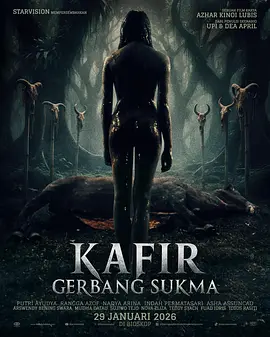
2026
7.0分
剧情片
卜提·阿尤蒂雅 Rangga Azof Nadya Arina 英达·帕玛塔萨里 Asha Assuncao 阿斯文迪·贝宁·斯瓦拉 Mutia Datau 苏吉沃·特乔 Nova Eliza Teddy Syah Fuad Idris Totos Rasiti Finni Vyrnanda Putri Firmansyah Yurike Findia
/
八年前,斯里的丈夫赫尔曼惨死于降头诅咒,她带着一双儿女逃离家乡,以为噩梦就此终结。八年后,斯里接到母亲重病的消息,只得带着女儿蒂娜、已成家的儿子安迪与儿媳拉妮重返爪哇老家。这次返乡意外打开了被尘封的灵魂门户,当年被斯里刻意掩盖的黑暗原罪逐渐浮出水面,沉寂的诅咒带着更凶猛的报复卷土重来,整个家族都被拖入无边的恐怖深渊。
更新至HD
2025
9.0分
剧情片
更新至HD
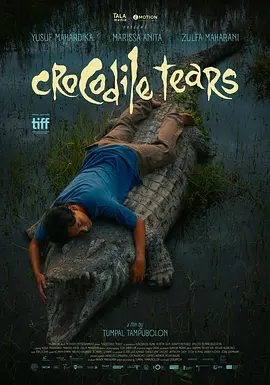
2024
7.0分
剧情片
男主角尤汉与母亲相依为命,栖身于西爪哇一座荒废的鳄鱼养殖场。母亲性格孤僻阴郁,以贩卖鳄鱼皮为生,对尤汉的控制近乎病态。当尤汉迷恋上一位女孩并开始向往养殖场之外的世界时,他的母亲却逐渐陷入了失控的深渊。图帕尔·坦普波隆是一位集导演、编剧、演员才能于一身的印度尼西亚电影人。《鳄鱼泪》作为其长片首作,入选2024年在多伦多国际电影节展映单元,延续其短片《最后的信徒》对“信仰与暴力”的探索,但以更生猛的..
更新至HD
2023
10.0分
剧情片
HD中字

2026
7.0分
剧情片
雷·费隆 伊芙·麦凯林 恩瓦·刘易斯 斯嘉丽·雷纳 萨姆·布坎南 艾莎·班克斯 马修·布鲁姆 柯里姆·哈桑 奥兰多·诺曼 乔尔·南克维斯 Seosaimhin·Hennelly 妮科尔·安萨里-考克斯 路易莎·宾德 塞科·迪亚比 Ben·Mangham
/
A forbidden love story between 18-year-old Noah and stepbrother Nick faces challenges as they pursue different paths - him in business, her at Oxford - while dealing with new relationships and secret..
HD中字
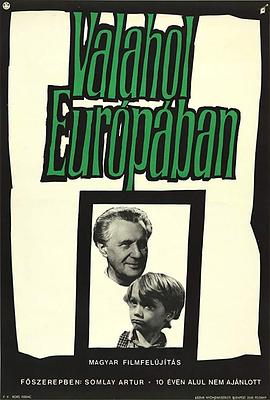
《欧洲的某个地方》剧情介绍
6080电影网提供影视作品欧洲的某个地方高清全集在线观看的影视全集网,剧情片《欧洲的某个地方》全集作品的导演是Radványi Géza ,由Artúr Somlay Miklós Gábor Zsuzsa Bánki 主演,欧洲的某个地方在豆瓣的评分为0.0,本片由小编于2024-11-01 11:15更新,希望大家喜欢,可以把《欧洲的某个地方》推荐给你朋友,本作品的地址为 https://www.qzalgy.cn/movie/33906.html
《欧洲的某个地方》简介:Somewhere in the remote region, the war ends. In the midst of ruined cities and houses in the streets, in rural hamlets, everywhere where people still live, are children who have lost their homes and parents. Abandoned, hungry, and in rags, defenseless and humiliated, they wander through the world. Hunger drives them. Little streams of orphans merge into a river which rushes forward and submerges everything in its path. The children do not know any feeling; they know only the world of their enemies. They fight, steal, struggle for a mouthful of food, and violence is merely a means to get it. A gang led by Cahoun finds a refuge in an abandoned castle and encounters an old composer who has voluntarily retired into solitude from a world of hatred, treason, and crime. How can they find a common ground, how can they become mutual friends The castle becomes their hiding place but possibly it will also be their first home which they may organize and must defend. But even for this, the price will be very high. To this simple story, the journalist, writer, poet, scriptwriter, movie director, and film theoretician Béla Balázs applied many years of experience. He and the director Géza Radványi created a work which opened a new postwar chapter in Hungarian film. Surprisingly, this film has not lost any of its impact over the years, especially on a profound philosophical level. That is to say, it is not merely a movie about war; it is not important in what location and in what period of time it takes place. It is a story outside of time about the joyless fate of children who pay dearly for the cruel war games of adults. At the time it was premiered, the movie was enthusiastically received by the critics. The main roles were taken by streetwise boys of a children's group who created their roles improvisationally in close contact with a few professional actors, and in the children's acting their own fresh experience of war's turmoil appears to be reflected. At the same time, their performance fits admirably into the mosaic of a very complex movie language. Balázs's influence revealed itself, above all, in the introductory sequences an air raid on an amusement park, seen in a montage of dramatic situations evoking the last spasms of war, where, undoubtedly, we discern the influence of classical Soviet cinematography. Shooting, the boy's escape, the locomotive's wheels, the shadows of soldiers with submachine guns, the sound of a whistle—the images are linked together in abrupt sequences in which varying shots and expressive sharp sounds are emphasized. A perfectly planned screenplay avoided all elements of sentimentality, time-worn stereotypes of wronged children, romanticism and cheap simplification. The authors succeeded in bridging the perilous dramatic abyss of the metamorphosis of a children's community. Their telling of the story (the scene of pillaging, the assault on the castle, etc) independently introduced some neorealist elements which, at that time, were being propagated in Italy by De Sica, Rossellini, and other film artists. The rebukes of contemporary critics, who called attention to formalism for its own sake have been forgotten. The masterly art of cameraman Barnabás Hegyi gives vitality to the poetic images. His angle shots of the children, his composition of scenes in the castle interior, are a living document of the times, and underline the atmosphere and the characters of the protagonists. The success of the picture was also enhanced by the musical art of composer Dénes Buday who, in tense situations, inserted the theme of the Marseilaise into the movie's structure, as a motive of community unification, as an expression of friendship and the possibility of understanding. Valahol Europaban is the first significant postwar Hungarian film. It originated in a relaxed atmosphere, replete with joy and euphoria, and it includes these elements in order to demonstrate the strength of humanism, tolerance, and friendship. It represents a general condemnation of war anywhere in the world, in any form.